Assessment & Remediation / FILE 13
Building Condition Assessment
Our building condition assessments provide a clear picture of structural health, maintenance priorities, and capital expenditure requirements. From single buildings to portfolio-wide reviews.
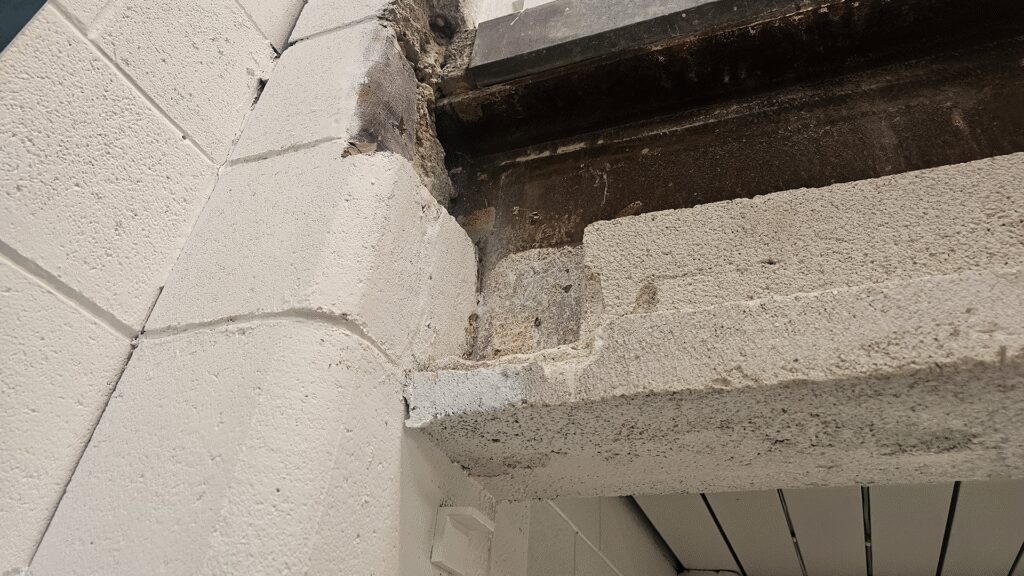 EVIDENCE / BUILDING-CON
Building condition assessment provides a systematic evaluation of the structural and physical condition of a building or portfolio of buildings. The assessment identifies current defects, deterioration trends, maintenance requirements, and projected capital expenditure for owners, managers, and body corporates.
Our assessment methodology combines visual inspection, non-destructive testing, and engineering analysis. We assess structural elements (columns, beams, slabs, walls, foundations), building envelope (facades, roofing, waterproofing), and building services interfaces where they affect structural performance.
Reports are structured around a building element hierarchy with condition ratings, priority classification, and estimated remediation costs. This format enables direct translation into maintenance budgets, sinking fund forecasts, and capital works programmes.
For strata buildings, our assessments are formatted to comply with body corporate reporting requirements and support sinking fund adequacy assessment under the relevant state legislation.
Capabilities
What we deliver
10 deliverables across the condition assessment engagement.
- 01Full building structural condition survey
- 02Element-by-element condition rating
- 03Priority classification (urgent, high, medium, low)
- 04Capital works cost estimation (10-year forecast)
- 05Sinking fund adequacy assessment
- 06Pre-purchase structural assessment
- 07Dilapidation reports for adjacent construction
- 08Portfolio-wide condition assessment programmes
- 09Photographic documentation and defect mapping
- 10Remediation scope and specification development
Process
Our methodology
01
Document Review & Planning
Review of available drawings, previous reports, maintenance records, and known issues. Inspection planning including access requirements and testing programme.
02
Field Inspection & Testing
Visual inspection of all accessible structural elements, non-destructive testing at selected locations, and photographic documentation of all identified defects.
03
Condition Rating & Prioritisation
Assignment of condition ratings to each building element, priority classification based on safety, structural, and maintenance criteria, and cost estimation for remediation.
04
Report & Capital Works Programme
Condition assessment report with findings, photographs, condition ratings, prioritised remediation schedule, and 10-year capital works cost forecast.
Use cases
Common applications
- Strata building maintenance planning
- Commercial property due diligence
- Pre-purchase structural assessment
- Government building asset management
- Heritage building condition recording
- Portfolio-wide condition programmes
- Insurance renewal documentation
- Sinking fund adequacy review
Frequently asked questions
4 questions answered.
Q01
What does a building condition assessment include?
A full assessment covers all structural elements (columns, beams, slabs, walls, foundations), the building envelope (facades, roofing, waterproofing), common areas, basements and car parks, and external areas. We assess each element for visible defects, deterioration, compliance with current standards, and remaining service life. The report includes condition ratings, photographs, remediation recommendations, and cost estimates organised by priority.
Q02
How often should a condition assessment be done?
For commercial and strata buildings, we recommend a full condition assessment every 5 years with interim inspections at 2 to 3 year intervals. Buildings in aggressive environments (coastal, industrial, tropical) may require more frequent assessment. Newly constructed buildings should have an initial assessment within 12 months of practical completion and again before the expiry of the statutory defect liability period.
Q03
Can you assess the adequacy of our strata sinking fund?
Yes. Our condition assessment reports are formatted to support sinking fund adequacy analysis. We provide 10-year capital works forecasts with estimated costs for each remediation item, enabling comparison against current sinking fund balance and contribution rates. This information allows body corporates to determine whether current contributions are sufficient to fund projected maintenance and replacement costs.
Q04
What is the difference between a condition assessment and a building inspection?
A standard building inspection (pre-purchase) is a visual walkthrough identifying visible defects at a point in time. A condition assessment is a more detailed engineering evaluation that includes non-destructive testing, condition rating systems, deterioration trend assessment, capital works cost forecasting, and engineering recommendations. It is an asset management tool rather than a snapshot. Condition assessments are prepared by registered structural engineers, not building inspectors.
Related
Related services
- 01Structural Defect InvestigationIdentifying cracking, subsidence, foundation movement, and construction defects.
- 02Remediation DesignEngineering repair specifications for concrete protection, structural strengthening, and life extension.
- 03Infrared ThermographyThermal imaging for moisture detection, delamination mapping, and building envelope assessment.
- 04Corrosion InvestigationHalf-cell potential mapping, resistivity testing, and reinforcement condition assessment.