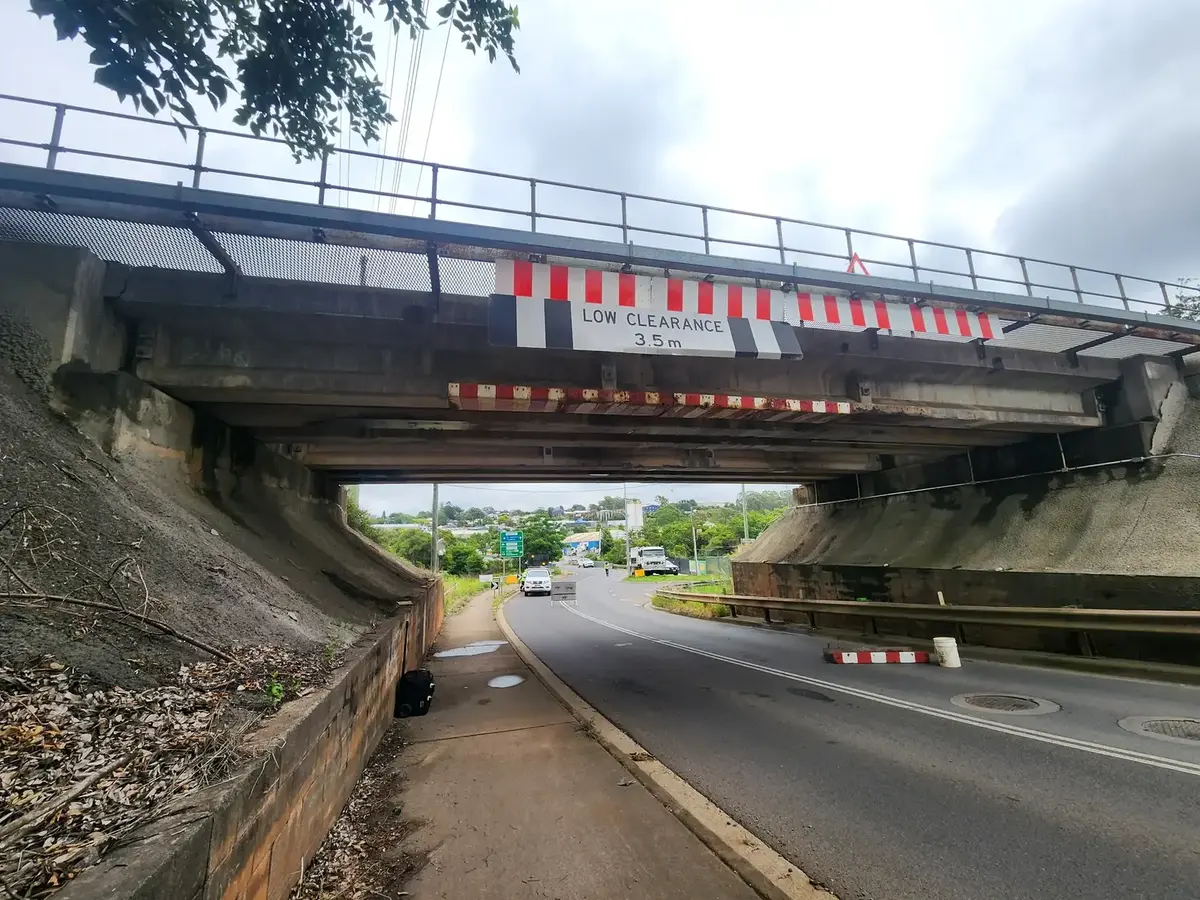
Industry sector
Forensic Engineering for Infrastructure Assets
Bridge assessment, tunnel condition evaluation, retaining wall analysis, marine structure inspection, and transport corridor structural investigation.
Discuss your projectInfrastructure forensic engineering addresses the structural condition of the built assets that transport and utility networks depend on. Bridges, tunnels, culverts, retaining walls, marine structures, and transport corridor elements all have finite service lives that are affected by design loads, construction quality, material durability, and maintenance history. When these assets show signs of deterioration or when incidents occur, forensic investigation is required to determine the extent of the problem and the appropriate response.
Bridge investigations are among our most technically demanding assignments. The structural system of a bridge involves multiple elements, each with its own condition and each contributing to overall bridge performance. Deck deterioration, bearing failures, substructure scour, tendon corrosion in prestressed concrete bridges, and connection fatigue in steel bridges are all failure modes we investigate regularly. Our assessments follow the Austroads bridge management framework and can include remaining life assessments and load capacity evaluations.
Marine and coastal infrastructure operates in the most aggressive environment that reinforced concrete structures encounter. Tidal zones, splash zones, and atmospheric zones each present different corrosion mechanisms. Embedded steel in concrete piles, wharfs, and seawalls corrodes faster in the tidal zone where alternating wetting and drying maximises chloride transport. We conduct detailed condition surveys of marine structures including underwater inspection coordination, chloride profiling, carbonation testing, and electrochemical assessment of corrosion state.
Retaining wall and embankment structures support the road and rail network across Australia. Failure of these structures is typically sudden and can cause significant disruption to the transport network and risk to the public. We investigate retaining wall failures including block wall bulging, tied-back wall anchor failures, sheet pile wall corrosion, and gabion wall deterioration. Post-failure forensic investigation determines the cause for liability purposes and informs the remediation design.
Services we deliver
- 01Bridge structural assessment and load rating
- 02Tunnel lining condition evaluation
- 03Retaining wall stability analysis
- 04Marine structure condition assessment
- 05Culvert and drainage structure assessment
- 06Transport corridor structural evaluation
- 07Post-incident structural investigation
- 08Structural health monitoring for critical assets
Typical engagements
- 01State road authority assessment contract
- 02Rail infrastructure owner engagement
- 03Port and maritime authority assessment
- 04Emergency post-incident investigation
- 05Asset management programme condition survey
- 06Remaining life assessment and remediation planning
Frequently asked questions
Infrastructure engineering questions answered
Q01
What does a bridge condition assessment include?
A bridge condition assessment follows the Austroads tiered inspection system. Level 1 is a routine visual inspection. Level 2 is a detailed inspection with targeted NDT testing of elements showing visible deterioration. Level 3 is a full forensic investigation involving material testing, structural analysis, and remaining life assessment. For a typical Level 2 assessment, we inspect all components of the bridge structure, map deterioration using the Austroads element condition rating system, conduct half-cell surveys on concrete elements showing corrosion risk, and provide a maintenance priority ranking with estimated repair costs.
Q02
How do you assess a marine concrete structure for chloride-induced corrosion?
Marine concrete assessment involves investigation across the different exposure zones of the structure. In the atmospheric zone (above high tide), we conduct carbonation testing and cover meter surveys. In the splash and tidal zones, we take cores for chloride profiling and measure the chloride concentration at the reinforcement level. Half-cell potential mapping identifies active corrosion zones across the submerged tidal zone elements. The combined results allow us to determine which elements are currently corroding, the corrosion rate, and the likely time before structural capacity is affected.
Q03
Can you investigate a retaining wall failure for a road authority?
Yes. Retaining wall failure investigation involves determining the failure mechanism (overturning, sliding, foundation failure, drainage failure, or connection failure), identifying whether the failure was due to design deficiency, construction deficiency, maintenance failure, or an unexpected loading event, and establishing the liability position for the asset owner. Our reports are prepared to withstand technical and legal scrutiny and are suitable for use in insurance claims, contractor disputes, and regulatory proceedings. We also design the remediation to ensure the replacement structure performs as required.
Q04
Do you provide structural health monitoring for infrastructure assets?
Yes. Structural health monitoring for infrastructure involves installing sensors on the structure and collecting data continuously or periodically to track changes in structural behaviour over time. For bridges, we monitor strain in key structural elements, crack width changes, bearing movement, and ambient vibration. For retaining walls, we monitor lateral movement, pore water pressure, and anchor load. Data is transmitted in real time to a dashboard that generates alerts when readings exceed defined threshold values. This allows asset managers to detect developing problems early and plan maintenance interventions before failures occur.