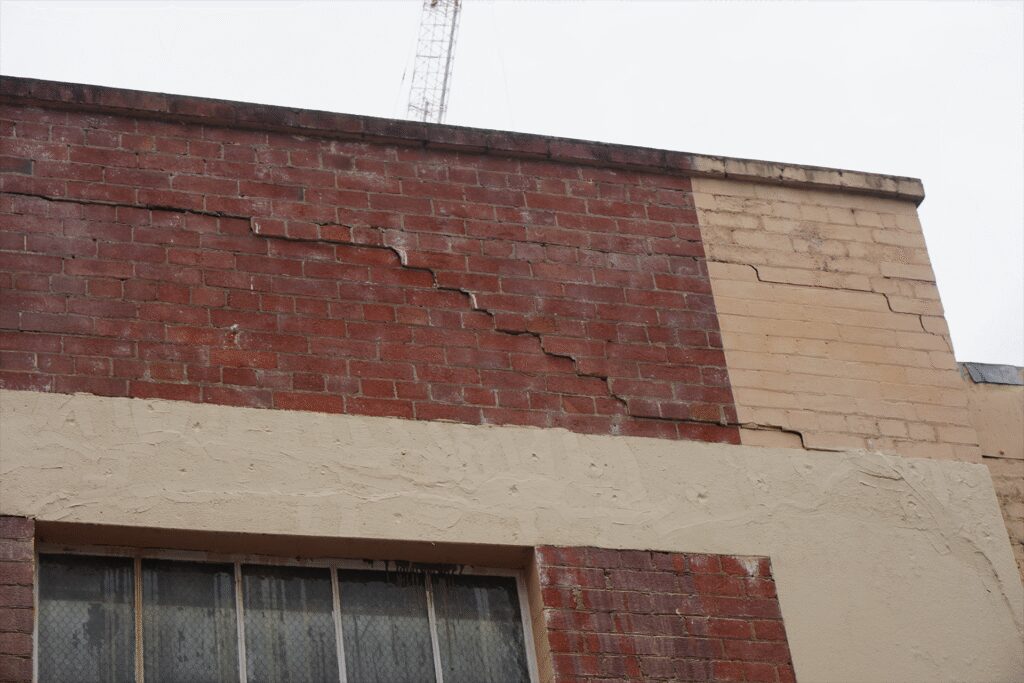
Forensic Engineering Newcastle
Newcastle has a distinct built environment shaped by its industrial heritage, its coastal location at the mouth of the Hunter River, and a large stock of pre-war brick and masonry residential buildings in the inner suburbs. Forensic investigation work ranges from coal-port and industrial infrastructure assessment through to residential cracking investigations in the sandstone-and-clay geology of the Hunter region.
Forensic engineering in Newcastle
Newcastle's older building stock - the inner suburbs of Hamilton, Islington, Mayfield, and Carrington - contains a high proportion of solid brick and fibrous cement residential construction from the early 20th century. These buildings are prone to foundation movement on reactive clay soils, mortar deterioration in older brickwork, and roof-to-wall connection failures under wind loading. The 1989 Newcastle earthquake, Australia's most damaging, left a legacy of unrepaired masonry damage in some older buildings that has continued to develop over subsequent decades.
The port and industrial waterfront of Newcastle presents a different category of investigation work. Steel and concrete structures in port environments face accelerated corrosion from the combination of industrial pollution, marine chlorides, and mechanical loading. We assess port infrastructure, industrial buildings, coal loader structures, and marine retaining walls for condition and remaining service life.
The Hunter Valley wine-growing and mining regions to the west of Newcastle present rural infrastructure investigation requirements including winery buildings, mine subsidence assessment, and rural retaining wall failures. Coal mine subsidence in particular creates a specific category of foundation movement investigation that requires understanding of the relationship between underground mining activities and surface ground movement.
Newcastle investigations are coordinated from our Sydney operations with local site teams. Inspection appointments are typically available within 5 to 10 business days.
Coverage area
Newcastle CBD, Hunter Valley, Lake Macquarie, Maitland, Cessnock, Port Stephens, and the Central Coast.
Newcastle investigations are coordinated from our Sydney operations. Inspection appointments typically available within 5 to 10 business days.
Local context
Newcastle-specific investigation challenges
Climate, geology, building stock, and local legislation all shape the nature of forensic engineering work in Newcastle. Our team understands these local factors.
01 / 04
Earthquake legacy damage assessment
The 1989 Newcastle earthquake left undisclosed damage in some older masonry buildings. We identify earthquake-related cracking patterns and distinguish them from subsequent settlement or weathering damage.
02 / 04
Industrial and port structure assessment
Newcastle's port and industrial waterfront has aggressive corrosion environments. We assess steel and concrete structures in port settings with marine and industrial pollution exposure.
03 / 04
Coal mine subsidence investigation
Hunter Valley coal mining creates surface subsidence affecting residential and rural properties. We investigate foundation movement and cracking in subsidence-affected areas.
04 / 04
NCAT expert witness reports
NSW building disputes go to NCAT. We prepare compliant expert reports and give oral evidence in Newcastle and Hunter Valley building dispute proceedings.
Recent investigations
Selected Newcastle projects
- 01
Port Infrastructure Corrosion Assessment
InfrastructureSteel and concrete condition assessment of port loading facility in marine environment
- 02
Inner Newcastle Brick Residence Foundation Investigation
ResidentialEarthquake damage and settlement cracking investigation in 1920s brick residence
- 03
Hunter Valley Winery Structural Assessment
HeritageStructural assessment of 1890s stone winery building for adaptive reuse
Frequently asked questions
Newcastle forensic engineering FAQs
Q01
Do you investigate earthquake damage in Newcastle buildings?
Yes. We can assess buildings for structural damage attributable to the 1989 Newcastle earthquake and its aftershocks. This requires careful analysis to distinguish earthquake cracking patterns (typically diagonal shear cracks in masonry, stepped mortar joint cracks) from subsequent settlement or moisture-related cracking. For properties with suspected undisclosed earthquake damage, we prepare reports suitable for insurance or property transaction purposes.
Q02
Do you assess industrial and port structures in Newcastle?
Yes. Port and industrial infrastructure assessment is part of our practice. We assess steel and concrete structures in aggressive environments including marine zones, coal dust exposure, and chemical spill areas. Assessments cover structural adequacy, corrosion state, and remaining service life, with recommendations for maintenance or remediation.
Q03
Can you investigate mine subsidence damage in the Hunter Valley?
Yes. Mine subsidence investigation requires analysis of the relationship between underground workings and surface movement. We assess cracking and foundation movement in properties within coal mining lease areas, review mine plans and subsidence predictions from the mining operator, and prepare reports for subsidence damage claims under the Mine Subsidence Compensation Act.
Q04
Do you provide expert witness reports for Newcastle NCAT proceedings?
Yes. Our engineers prepare expert reports for NCAT Home Building Division proceedings across Newcastle and the Hunter Valley. Reports comply with NSW evidence requirements and the Expert Witness Code of Conduct. We attend expert conclaves and give oral evidence at NCAT hearings.
Other locations
We operate Australia-wide
Forensic investigations across all major Australian capital cities and regional centres.